
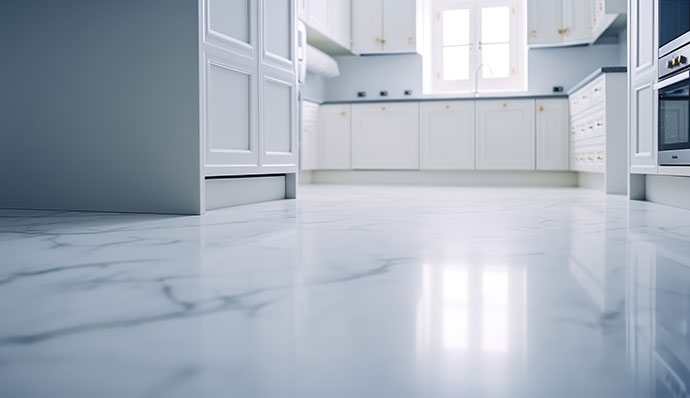
Your stone floors can really take a beating. You know they are very durable, so it’s easy to put their strength to the test with lots of traffic. Look around you right now and think about how they looked when first installed. If they look very different, then it might be time for a cleaning or even restoration. You just need to determine what is necessary in your home.
So, what is the difference between having your stone floors cleaned vs having them restored?
Cleaning your stone floors helps get rid of stains and the buildup of dirt that can dull your floor. Restoring your stone floor involves fixing cracks and other types of damage, as well as cleaning and polishing.
The best way to know which fits your home is to have a professional inspection done. They can recommend what level of care your stone floor needs to return to its original beauty.
What Does Routine Cleaning Entail?
Routine cleaning of your stone flooring is as easy as sweeping to control dirt and dust, and mopping with mild soap. You don’t want to use bleach or other types of harsh chemicals because they could affect the sealant on your stone.
Spot cleaning is very important, too. If you spill juice or wine on your floor, it needs to be cleaned up right away.
Many spills can be cleaned up simply with paper towels. You don’t need to wipe up the whole room, but if you don’t take care of that spill right away, you are inviting a nasty stain into your home.
What is the Science Behind Restoration?
There are various types of stone floors, including marble, granite, slate and limestone. The science behind restoring them begins with expertise in the type of stone you have. Understanding how porous your stone is, for example, affects how it is sealed, and knowing the hardness level helps determine how cracks or scratches are repaired.
WIth experience, flooring experts have the knowledge, skill and technique to restore all types of stone and tile to their original shine.
What are the Techniques?
Most of the time, if you need your floor restored, you have some scratches and stains that need to be erased. Grinding is a technique that uses specialized tools to get rid of those blemishes and even out the surface of your stone.
Once the scratches have been ground out, honing or polishing can take place. Both smooth the surface of stone, with honing creating a matte finish and polishing creating a shiny one. Special tools are also needed for these techniques.
Buffing is a finishing technique similar to polishing, but it uses different materials to achieve a smooth finish. A restoration expert can determine which technique is most appropriate for the stone in your home.
The last technique, sealing, protects your stone by creating a layer between the beautiful porous stone and all the dirt, food, or other things that collect on your floor. Sealing protects your floor and ensures lasting results.
How Does Restoration Help Maintain Stone Floors?
Once your floor is restored to its original beauty through restoration, regular cleaning and maintenance are easy because a quality sealant is simple to care for and the cracks have been eliminated, which prevents dirt buildup. The stone floor has been restored to its original strength, too, which helps support its durability.
Experience the Best in Michigan Stone Floor Restoration
If it’s time to renew and strengthen your stone floors, Restore-A-Floor in Brighton are the ones to call. Our stone floor restoration and tile cleaning services have been a top choice throughout Southeastern Michigan for more than 20 years!
We take on all types of floor, tile and counter issues from cleaning and sealing to repairing, polishing and more. Once you see the results, your home will not only look amazing, it will also feel like a new. Make sure to schedule a no -obligation inspection and estimate this Summer!