
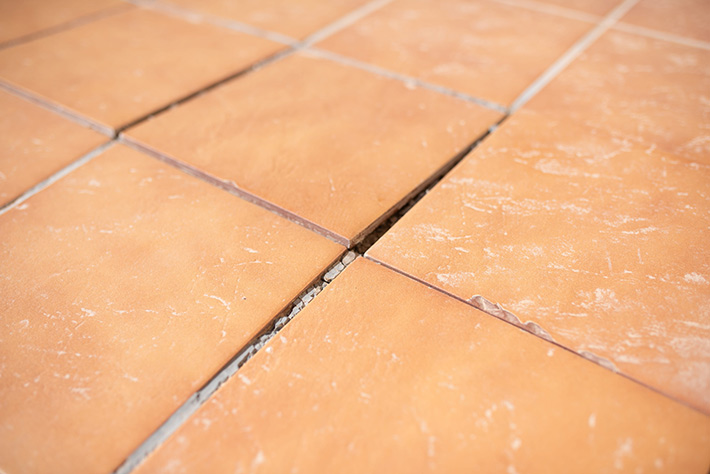
A stone floor can look clean and polished but still feel off underfoot.
You notice it when a sock catches on the edge of a tile. Sometimes, sunlight makes one row of stone look higher than the next. In some homes, the problem is subtle enough that people live with it for years. In others, raised edges are obvious and persist in high-traffic areas such as entryways, kitchens, or bathrooms.
This unevenness is called lippage, and it occurs when one tile sits higher than its neighbor.
Lippage can happen during installation or develop as the floor settles, adhesive changes, or moisture affects materials below.
Lippage is more than a visual problem. It makes cleaning harder, creates a tripping hazard, and makes a floor look rougher.
What Lippage Looks Like in a Real Home
Lippage is easiest to see when light hits the floor from the side. A window, lamp, or flashlight shows shadows along grout lines. Instead of a flat surface, you see ridges where tiles meet.
Sometimes you feel lippage before you see it.
Bare feet catch the edge of a stone tile. A mop snags in the same spot each time. A dining chair scrapes over the floor. Raised edges are most noticeable when carrying laundry or walking in socks.
Homeowners often say, “This tile feels higher than the others,” or “Everyone trips over the same spot.”
In natural stone, lippage stands out because the stone varies in thickness, texture, and finish. A raised edge creates a hard line that disrupts the floor’s natural look.
Why Stone Tiles End Up Uneven
There is not always one cause. Some floors have lippage present since installation, often because stone tiles require a flat, properly prepared surface. Small issues in the setting bed can leave one tile sitting higher than its neighbor.
Older floors can also develop lippage over time.
As a home settles, wood framing shifts with changing humidity. Moisture can get near a doorway or wall. Sometimes the tile stays attached, but the floor beneath moves, causing uneven edges.
Large-format stone makes the issue more obvious. A small difference across a wide tile becomes easier to see, especially on a polished floor.
Raised edges take the hit first. Shoes, grit, furniture, and regular traffic rub against these high points. Over time, those edges may look duller than the rest of the floor, even if the stone was originally polished evenly.
Why It Is Worth Addressing
Lippage usually gets worse in busy areas.
The biggest concern is tripping. Even a slight edge can catch a slipper, a child’s foot, or a walker. In businesses, this can become a liability. At home, it’s frustrating when someone keeps catching a toe.
Cleaning is difficult because dirt tends to accumulate along raised edges. Mops glide over high points, leaving grime in the lower joint, and vacuum heads chatter. Even after cleaning, uneven areas continue to collect soil, making the surface look dingy.
The appearance is affected too. Stone floors should feel calm and solid, but a row of raised tiles breaks that effect. Once you notice an uneven pattern, it’s hard to ignore.
Why Filling the Joint Usually Does Not Solve It
Adding grout, caulk, or a coating at the joint may soften the transition, but it does not level the surface.
It can also create a new cleaning problem. Extra material along grout lines darkens, cracks, or peels. On polished stone, it looks like a patch rather than part of the original floor. Tile edges are raised, and if the floor is otherwise sound. If the tiles are stable and the difference is workable, controlled grinding and restoration can often correct the surface.
How Stone Lippage Is Corrected
Lippage removal is a careful process. The goal: reduce the raised edges, blend the surface, and restore the finish to make the repair seamless.
A restoration technician begins by checking for loose tiles and cracks, since there is no point in leveling a floor if the tiles are shifting. Once the floor is stable, specialized equipment is used to gradually level the raised tile edges. The work is completed in stages to create a smoother, more even surface.
A rougher abrasive brings the high spots down. Finer steps smooth the surface and remove the marks left by the earlier grinding. From there, the stone can be honed or polished to match the finish the homeowner wants.
A floor doesn’t always need a mirror shine. Limestone, travertine, and slate may look better with a honed finish. What matters is the surface feels even, looks intentional, and doesn’t catch random light. If a stone floor feels uneven, catches mops or socks, or looks wavy in side light, have it inspected before the issue worsens. Addressing it early allows work to focus on the affected areas rather than a full restoration.
Smoother, Better-Looking Stone Floors with Expert Restoration
Restore-A-Floor can evaluate raised stone tile edges, decide whether lippage removal is right, and restore floors so they feel smoother, look better, and are easier to live with.
From lippage removal and stone floor honing to polishing, cleaning, and sealing, our experienced team provides trusted stone restoration services designed to bring out the natural beauty and performance of your floors. Contact Restore-A-Floor in Brighton today to schedule a free estimate.