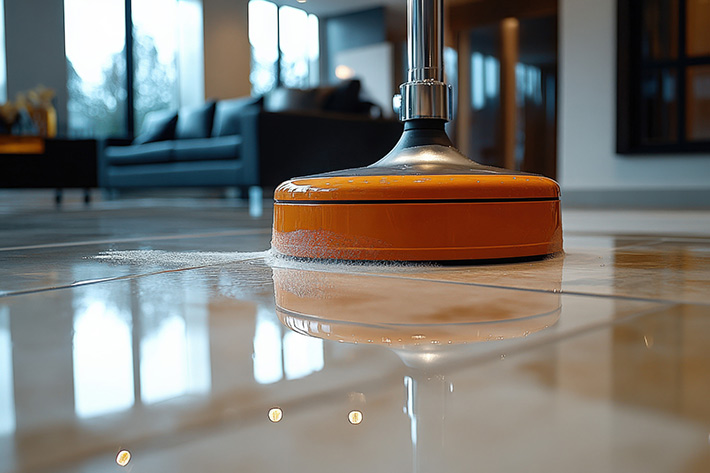
Stone flooring is one of the most commonly used materials in new builds and renovations because of its natural beauty and strength. Homeowners flock most commonly to granite, slate, or marble, with less common choices like limestone and quartzite coming close behind.
But like any material, stone has some drawbacks, primarily its porous nature. That means it’s more susceptible to staining than you might realize, and what can stain your stone floor may surprise you.
In many cases, a stone floor restoration company can restore stained stone to like-new.
Here are a few tips from our stone floor restoration team to help you understand what to expect from different types of stains and some quick fixes.
Water
Because stone floors are commonly installed in high moisture areas like the kitchen, bathrooms, or laundry room, water is a surprisingly common culprit for stains. You might be thinking, “water, seriously? Why can’t I just let it dry?”
The problem with this faulty solution is that it isn’t the water itself that stains your stone. Instead, what happens is water infiltrates the porous surface. And while it does evaporate, it can leave behind deposits that cause discolorations that can’t be wiped away.
In some cases, strong chemicals may be needed to lift and remove the spot(s).
Food & Drink
We’ve all been there. You’re stirring a nice big pot of spaghetti or pouring a cup of steaming black coffee then… BAM! It’s all over the floor.
Unfortunately, these types of food and drink can quickly enter the porous stone and stain the surface, or very acidic food and drink may even erode away any protective sealant you may have.
That’s why it’s important to act fast and blot up any spills immediately. You can also take extra precautions by laying out mats or extra protection when dealing with particularly messy items or hosting guests.
Oil
Oils come in all varieties from cooking to motor. Regardless of the type, oil can be a big detriment to stone floors because of how difficult it can be to remove.
Think about how hard it can be to wipe cooking grease off of your stove! The sticky, runny nature of oils means spills can get out of hand quickly, and even the best efforts to dry the substances up can leave residue behind that then causes permanent stains.
Metals and Rust
Have you ever seen an unsightly reddish-orange color on a beautiful gray stone? Most likely you’re looking at a spot where metal came in contact with the floor and caused a reaction.
Because of the chemical nature of these stains, they can be some of the most difficult to remove. That’s why it’s important to know the difference between DIY stain removal and when you should reach out to the experts.
DIY Stain Removal
Prevention is the best protection. At first sight of a spill or mess, be sure to clean it up immediately. The next step would be to apply some effective home remedies.
For example, leaving a baking soda and hydrogen peroxide solution can help lift stains from porous surfaces so they can then be cleaned. You can also try mild soap and warm water.
The biggest mistake many homeowners make is using harsh cleaners that are too strong, then permanently damaging their floors worse than the original stain.
That’s why when you’re unsure, it’s better to be safe than sorry and call the pros.
Contacting the Pros
Stone floor restoration services understand which cleaners are appropriate for which types of stone flooring, eliminating the risk for accidental damage.
Additionally, they have access to equipment such as high-powered heat tools or chemicals not available to the public that are more efficient at treating your flooring stains. They also can seamlessly apply a sealant as well as hone and polish any stone surface reviving any stone surface.
And if an accident does happen? They have the necessary insurance to fix any potential missteps. It protects your time, money, and peace of mind.
Stain Takeaway
While a great investment with lasting value, stone flooring is only as beautiful as it’s maintained. Because of its porous nature, liquids and oils from everyday spills can cause lasting damage.
We recommend a combination of care – keep a stash of safe, natural cleaners on hand for emergencies, and contact an experienced stone restoration service promptly. Don’t delay – the longer a stain sits, the more difficult it is to remove!
Have a Stone Floor Issue? Contact Brighton’s Trusted Restoration Pros
Restore your floors with confidence by calling the pros at Restore-A-Floor in Brighton. Our services are trusted and backed by more than twenty years of experience taking on any stone and tile floor challenge. Our equipment, products and techniques come together to produce impressive results that are long-lasting.
Restored floors do more than shine, they bring new life back into your home. Schedule a Free Estimate Today!