
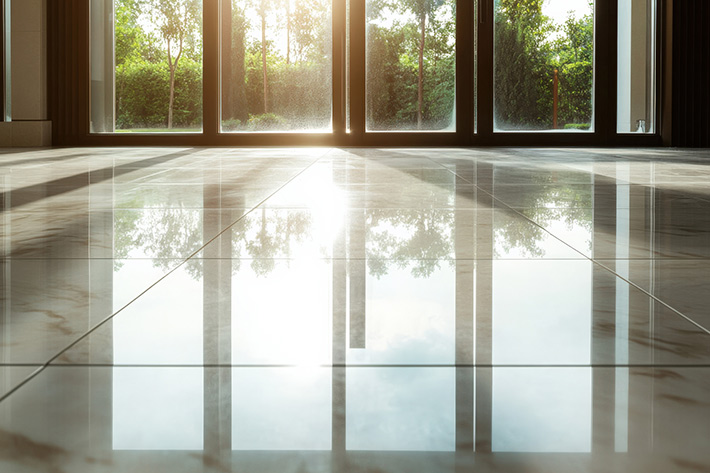
If you’re looking for floors that last, stone flooring is typically the most popular option. Several types, such as marble, travertine, limestone, and other natural stones, deliver style and character while maintaining durability. Many other flooring options simply don’t compare.
That said, over time, even the toughest stone surfaces begin to show wear and tear and will need to be “revived”.
From dull patches to scratches and stains, sometimes, regular cleaning doesn’t quite do the trick.
This is when most homeowners assume replacement is their answer. Truthfully, full replacement is often unnecessary. Luckily, professional stone floor restoration can transform worn stone flooring into something as good as new, without disruption or high cost.
Do stone floors need to be replaced when they look worn, or can they be restored?
In most cases, stone floors don’t need to be replaced when they show wear; professional restoration can correct surface damage, restore appearance, and extend the life of the floor for many years.
Understanding the difference between normal aging, surface-level damage, and structural failure can save your wallet thousands of dollars. Knowing when restoration makes sense and when replacement is truly necessary helps you make a confident, informed decision rather than reacting to repairable issues.
The Most Common Ways Stone Floors Show Wear and Tear
One of the biggest misconceptions about stone flooring is that once it loses its original look, it has reached the end of its lifespan. Unlike many synthetic materials, natural stone is meant to be refinished. The surface can be honed, polished, repaired, and resealed multiple times over its life.
Restoration works by addressing the top layer of the stone. That’s where most damage occurs, from foot traffic, spills, improper cleaning products, or everyday use. As long as the stone itself is structurally sound, restoration is usually a viable option.
Sign #1: Dull or Uneven Shine
If your stone floor appears cloudy, flat, or uneven in spots, it’s often an early sign that it needs restoration. Areas with high foot traffic, such as hallways, kitchens, and entryways, often lose their shine first.
This doesn’t mean the stone can’t be fixed. Usually, honing and polishing will remove surface wear and restore an even finish to the entire floor. Adding a new seal afterward helps protect the stone and keeps it looking good for longer.
Sign #2: Etching from Spills or Cleaning Products
Etching often happens on marble, limestone, and travertine. Acidic substances like citrus juice, wine, vinegar, or some cleaners can react with the stone, leaving dull spots or marks.
These marks may appear as stains, but they are actually small spots where the surface has changed due to a chemical reaction. Regular cleaning won’t eliminate them. Restoration services can gently resurface the stone and blend the etched areas into the rest of the floor.
Sign #3: Scratches, Chips, or Surface Wear
Over time, moving furniture, tracking dirt from shoes, or dropping items can leave scratches or small chips on stone floors. Although these flaws may seem permanent, many can be addressed during restoration.
Professional technicians can fill chips, smooth uneven edges, and re-polish the surface so damage becomes far less noticeable or disappears entirely. This is especially effective for natural stone floors that have been installed for several years but are otherwise in good condition.
Sign #4: Stains That Keep Coming Back
Some stains go deeper than just surface dirt. Oil, moisture, and some organic materials can soak into porous stone, making them difficult to remove with standard cleaners.
If stains reappear after cleaning, restoration may be necessary. Deep cleaning methods, combined with proper sealing, help draw out embedded stains and prevent future absorption. This is particularly important in kitchens, bathrooms, and entryways.
Sign #5: Grout That Looks Worse Than the Tile
Sometimes the stone still looks good, but the grout lines don’t. Discolored, cracked, or deteriorating grout can make the entire floor look old and neglected.
Stone floor restoration often includes grout repair, recoloring, or sealing. Refreshing the grout can dramatically improve the overall appearance of the floor without replacing any tile.
When Replacement Is the Better Option
While restoration solves most surface issues, there are times when replacement makes more sense. Severe structural cracking, widespread subfloor movement, or large sections of stone that are beyond repair may require removal.
That said, these situations are less common than homeowners expect. A professional evaluation can determine whether the damage is cosmetic or structural before committing to replacement.
Related Questions
How long does stone floor restoration last?
With proper sealing and maintenance, restored stone floors can look great for many years before needing additional work.
Is stone floor restoration cheaper than replacement?
Yes. Restoration typically costs significantly less than removing and reinstalling stone flooring.
Can scratched stone floors be fixed?
In most cases, scratches can be honed and polished out during professional restoration.
Does sealing stone floors really make a difference?
Sealing helps protect against stains, moisture absorption, and future surface damage.
How often should stone floors be restored?
This depends on traffic and use, but many residential floors only need restoration every several years.
Why Restoring is Smarter
Worn stone floors don’t automatically mean it’s time for replacement. Dull finishes, etching, scratches, and stubborn stains are often signs that the surface needs attention, not that the floor has failed. Professional stone floor restoration addresses these issues directly, renewing the appearance while preserving the original material. Replacing stone floors is for extreme cases or if you are willing to invest in a change.
Restore, Don’t Replace: Protect the Beauty of Your Stone Floors
For homeowners weighing their options, professional restoration is a practical middle ground – it brings back beauty, extends the life of your floors, and avoids the cost and disruption of full replacement. With proper care, stone continues to deliver the timeless elegance and durability it was chosen for in the first place.
If your floors are losing their finish or showing wear, contact Restore-A-Floor in Brighton for expert stone floor cleaning, polishing, and sealing, and restoration services that help your home look its best.