
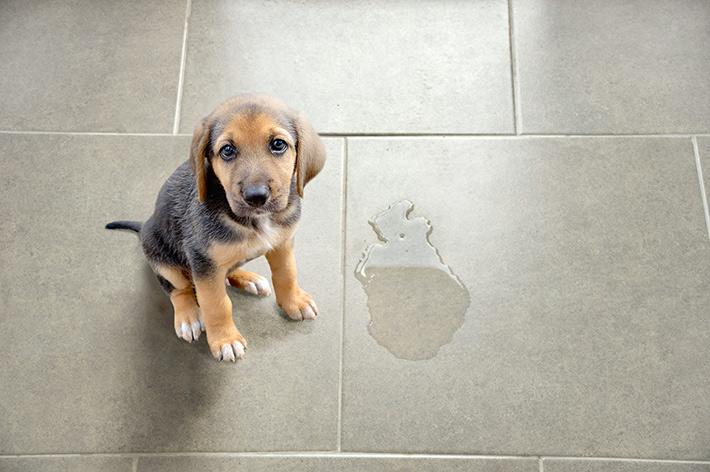
Pet accidents happen. Homeowners are often surprised by how quickly a single spot can leave what seems like a permanent mark on stone. You blot, mop, and use cleaners that work elsewhere, but the stain remains. Sometimes it worsens: the area darkens, or the shine fades into a dull patch visible when light hits it.
With natural stone, it’s more than a surface mess. Urine—a mix of water, salts, and waste—can soak in, react with stone, and leave residue after the moisture is gone.
Why is pet waste rough on natural stone floors?
Stone floors are tough but often porous. Travertine and limestone are significant examples, and marble can be sensitive. Stones with pores or pits let liquid wick down quickly, especially if the floor is poorly sealed or the sealer is thin.
Urine causes problems in a few different ways:
It can soak in and leave a dark stain.
That dark spot is moisture plus organic material below the surface. Cleaning the top may leave pores discolored.
It can dull or etch the finish.
Some stones react to acids. Even when urine isn’t strongly acidic, its moisture and chemistry can damage surfaces, leaving cloudy or rough patches that don’t polish with household products.
It can leave salts behind.
As moisture evaporates, minerals and salts remain. This residue attracts dirt, making the area look permanently dingy.
It can create an odor that comes back.
If urine penetrates grout lines, pits, or the stone itself, the smell can reappear when humidity rises, when the floor warms up, or after mopping.
This is why “I cleaned it three times” does not always solve the problem. The issue is often no longer on the surface.
Signs you are dealing with more than a surface spot
A few clues tell you the stain is set deeper than a quick wipe-down can reach:
● The spot looks lighter or darker than the surrounding stone even after it dries.
● Shine is missing in a defined, often halo-shaped, area.
● The stone feels slightly rough or chalky in that patch.
● The odor fades, then comes back after rain, humid weather, or mopping.
● The grout line next to the stain is darker than it should be.
If any of those sound familiar, you are in restoration territory, not regular cleaning territory.
What not to do if you want the floor to look right again
The most common mistake is reaching for harsh cleaners. Strong acids can etch calcium-based stones like marble, travertine, and limestone. Strong alkaline cleaners can also damage finishes and leave residues that attract soil.
Another mistake is scrubbing aggressively with abrasive pads. You can remove the finish or change the texture in a small area. That is when a stain becomes a noticeable “spot repair” that stands out from the rest of the floor.
If you have tried multiple cleaners and the stain has not changed, stop experimenting. At that point, you are more likely to widen the damaged area than to fix it.
What restoration can fix, and what it usually involves
The best method depends on the stone, finish, and depth of contamination. Professional stone floor restoration usually includes some of the following steps:
Targeted stain treatment
This is where poulticing can come into play. A poultice is a paste-like material applied to draw out staining from pores. It is not instant or one-and-done, but it can lift discoloration that normal cleaning cannot.
Deep cleaning of grout and pits
Urine loves to collect in grout lines and natural voids in travertine. Removing the embedded residue can be as important as treating the stone.
Honing to remove etching
If the surface is dulled or etched, cleaning alone will not bring back the finish. Honing removes a very thin layer of stone to level the damaged surface and restore its uniform appearance.
Polishing or finishing restores the floor’s consistent appearance. Aim for a continuous, uniform finish—not a shiny patch.
Sealing
Sealer does not make stone waterproof, but it can slow absorption and give you time to wipe up accidents before they soak in. The right sealer and the right application matter, especially in homes with pets.
How to reduce the chances of repeat staining
Once the floor is back in good shape, prevention is mostly about quick response and surface protection.
● Blot accidents quickly and avoid flooding the spot with water.
● Use a pH-neutral cleaner made for natural stone for routine mopping.
● Monitor high-risk zones: doorways, favorite pet spots, baseboards.
● Reseal based on your traffic and stone type, not a rough schedule.
Get an Expert Evaluation for Stone Floor Restoration
If you are dealing with pet urine stains, dull patches, or an odor that keeps returning, a proper evaluation can save you from throwing more products at the problem. Restore-A-Floor in Brighton can identify whether the issue is staining, etching, or both, and then recommend a restoration approach that restores the finish evenly, rather than leaving a noticeable patch.
For decades, we’ve restored stone floors and tile in homes and businesses across Southeast Michigan, consistently exceeding expectations.