
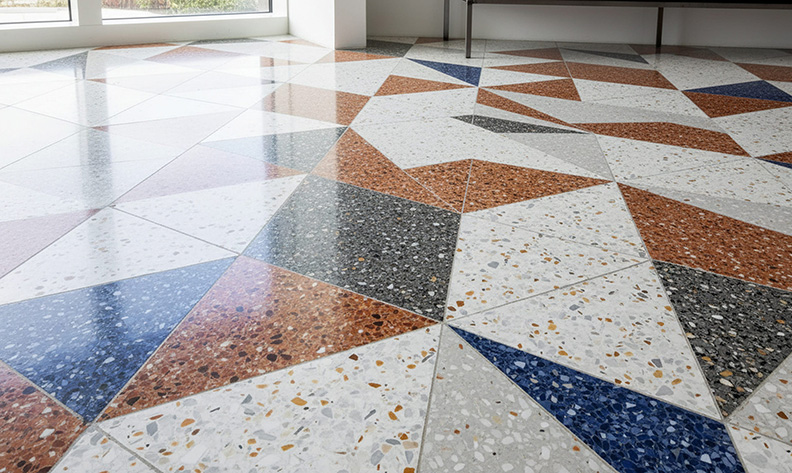
Terrazzo floors are made to last, so it’s common to find original flooring in older homes and commercial buildings. Even after years of use, the material underneath often stays in good condition.
But the surface can still show wear.
High-traffic areas can become dull, while spots near walls often keep their original shine. Scratches show up when sunlight hits the floor. In older terrazzo, some aggregate may stand out more than the rest.
These changes can make a sturdy floor look worn out even though it doesn’t need to be replaced yet.
Professional stone floor restoration can restore balance and highlight the character that made terrazzo attractive in the first place.
Why Terrazzo Wears Unevenly
Terrazzo is made by mixing decorative aggregate into a binder and finishing it to create a smooth surface. Since the pattern goes all the way through the material, not just on top, the floor can often be refinished multiple times, depending on its condition and thickness.
Foot traffic brings in fine grit that wears down the surface, especially in busy areas. Hallways can lose their shine, while corners stay brighter. Regular mopping removes dirt, but it can’t fix surface wear. Once scratches and scuffs start to scatter light, the floor may still look cloudy right after cleaning.
Old Wax And Coatings Can Hide The Terrazzo
Some terrazzo floors have been cared for over the years with wax or other surface finishes.
At first, these products can make a worn floor look shinier. But after many applications, buildup can form and change how the terrazzo looks underneath.
The floor might start to look yellowed or uneven. Areas with more foot traffic can stand out as the coating wears down faster there.
Before refinishing, check the surface so the restoration matches what’s really there. Worn coatings need a different approach than wear in the terrazzo itself.
Removing old buildup can sometimes reveal a floor that looks quite different from what homeowners are used to.
Small Surface Damage Does Not Always Mean Replacement
Older terrazzo floors can develop chips or small areas of damage, especially in high-traffic areas.
Since terrazzo is poured and finished, some damaged spots can often be fixed without taking out the whole floor. Whether this works depends on the severity of the damage and the condition of the surrounding area.
How the repair looks is important. Terrazzo has a unique mix of aggregate and background, so a patch that stands out can be just as noticeable as the original damage. A restoration professional can assess whether a repair can blend into the existing floor before the larger surface is refinished.
Refinishing Restores A More Consistent Surface
If the terrazzo itself is worn, restoration usually means working right on the surface.
Using finer abrasives progressively removes shallow wear and smooths scratches. After that, the floor is finished to the desired level of shine.
This process helps even out the difference between worn areas and protected spots in the room. It also brings out the aggregate again, which is a big part of what makes terrazzo look good. It does not have to be excessively glossy. Some spaces benefit from a softer finish that suits the building’s age or style.
What matters most is having an even look across the whole floor.
Cracks Need To Be Evaluated Before Refinishing
A shiny finish can’t fix problems caused by movement under a damaged floor.
If you see cracks in the terrazzo, those spots should be checked before refinishing. Some cracks are old and stable, while others may indicate movement in the building’s structure.
Understanding that difference helps determine which Knowing the difference helps you choose the right repair. It also gives the technician a better chance to blend the repaired area with the surrounding floor.
This is especially helpful with older floors, where keeping the original terrazzo is a big reason for restoring it.
Maintenance Becomes Easier After Restoration
Once a terrazzo floor is properly restored, it’s usually easier to maintain because the surface is smoother and more even.
Regular cleaning can then focus on removing daily dirt instead of trying to make up for years of wear. Using the right cleaners also helps keep the floor looking good.
Abrasive cleaning products can shorten that lifespan by creating new surface wear. Harsh chemicals can cause different types of damage depending on the terrazzo’s composition.
Taking care of the floor after restoration helps protect all the work that’s been done.
Bring An Older Terrazzo Floor Back into Focus with Restoration
Terrazzo floors often last for generations. Even if a floor looks dull now, it might still have many years of life left beneath the worn surface.
Restore-A-Floor in Brighton MI provides expert stone floor and tile restoration services that can remove years of wear and bring the decorative aggregate back into focus while preserving the original floor. Our professional cleaning, honing, polishing, and sealing services help homeowners and businesses address worn surfaces and bring back a more consistent, attractive finish without replacement.
If an older stone or terrazzo floor has developed dull traffic areas or an uneven finish, contact us to schedule a no-obligation evaluation and estimate!