
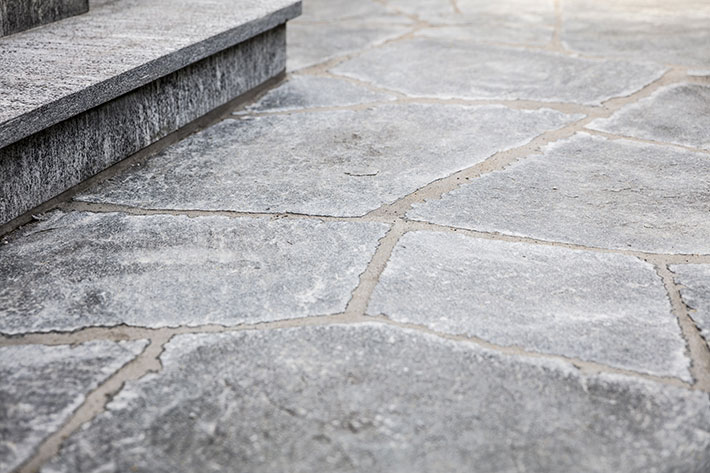
You may be excited about installing outdoor stone flooring in your outdoor patio or kitchen. However, this flooring type can be even more high maintenance than indoor stone flooring, primarily because it is exposed to so many more elements outdoors than indoor stone.
Such exposure can wreak havoc on your outdoor stone flooring, making it lose its aesthetic appeal rather quickly. Keep reading to discover more about the problems that can arise with outdoor stone flooring and how to minimize or avoid these issues.
Stone floors adorn so many homes inside and out and face the same challenges no matter their placement.
Dirt
One of the most common problems you will experience with outdoor stone flooring is dirt. There’s no way around this problem since dirt is all around outdoors. The best way to address this issue is to clean your stone flooring regularly. Sweeping your stone flooring once a week is a simple way to keep dirt at bay. However, if you have caked-on dirt, it is a good idea to pressure wash your stone flooring with a soft wash solution and a low PSI pressure washer.
You should pressure wash your stone flooring at least once a year. However, if you entertain in the space often, it is a good idea to pressure wash the area at least quarterly to remove grease, stains, and other grime that may accumulate from entertaining.
Algae
Another messy issue that your outdoor stone floors may suffer from is algae. Green algae is one of the most common types of algae outdoors, particularly in humid areas. It is a microorganism with chlorophyll that grows compactly on stone and other hard surfaces.
Another type of algae is black algae, which resembles dirt. Like green algae, it is a microorganism that grows on stone. Although both types may seem harmless, they survive by eating the stone’s surface, which could damage it over time.
Cleaning your stone floors regularly with a cleaner formulated for removing algae can help keep this organism off your stone floors. Additionally, if you have vegetation growing near the stone floors, it’s a good idea to trim it back and keep the area moisture-free.
Cracks
Over the course of the year, your stone floors can endure a lot from the environment. They may take a pummelling from the sun’s heat and UV rays. Another issue your outdoor stone floors may experience during winter is a freeze-thaw cycle.
This occurs when moisture seeps into outdoor flooring tile, warms above freezing during the day, and drops below freezing at night. Such harsh weather conditions could make your stone floors crack under the pressure of these extreme temperatures and make them look unsightly. This phenomenon is most common with travertine stone floors.
To minimize cracking, it is ideal to choose an outdoor stone that is less prone to cracking and seal it as soon as possible after installation.
Staining
Staining is another challenge you may face with outdoor stone flooring. This typically occurs when a strongly pigmented drink or food, such as red wine or spaghetti sauce, seeps into your natural stone floors. While natural stone is durable, it is very porous, making it absorb these spills rather quickly. As a result, these types of spills can penetrate the stone and cause it to discolor if they are left over a period of time.
Ideally, you can avoid staining on your outdoor stone flooring by quickly removing these spills once they occur. You can also minimize the chances of these spills penetrating the stone by sealing your floors.
Overgrown Weeds
Overgrown weeds seeping through the cracks of your stone flooring could become an eyesore. Proper installation should avoid this issue. However, there are times when a few weeds manage to squeeze through the tile through the groutlines.
If outdoor stone flooring starts showing weeds, you can remove it with a weed-control product. You may also pour boiling water over the weeds to eliminate them. Before the area dries, adding polymeric sand to the area and letting it dry will prevent the weeds from growing in the area again. Sealing your outdoor stone floors can also help keep weeds at bay.
Scratches
Another problem you could encounter with stone floors is scratches, particularly if you have a stone floor that is not sealed. This usually happens when metal or some other element slides across the surface of your stone floors, creating scratches that can make your flooring look worn.
To avoid this problem, it is a good idea to avoid dragging outdoor furniture across the stone floors. It’s also a good idea to ensure the outdoor furniture has protective rubber padding on the bottom so that the metal won’t scrape the surface of the stone floors.
Stone Floor Restoration Services for Homes and Businesses
You don’t have to live with unsightly outdoor or indoor stone floors, and you don’t have to go through the large expense and stress of replacing them. If you experience any of these issues and want your outdoor or indoor living space to look new again, a stone floor restoration company can help.
Call Restore-A-Floor in Brighton today to schedule an appointment so that we can help you make your stone floors look elegant and new. We have been restoring, cleaning and polishing all types of stone floors, tile and grout as well as counters with our expert stone restoration services for decades.