
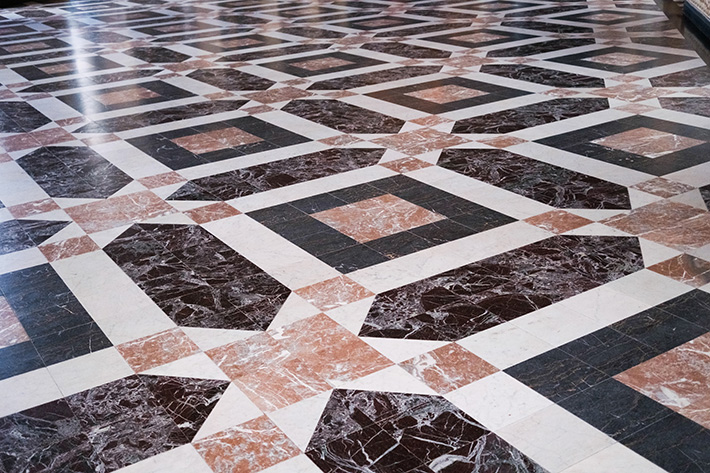
Historic building materials carry the stories of their structures. Stone floors add character but restoring them is a careful balance. You want the floor to look clean, stable, and functional, but the goal is never to erase history.
Restoration work on old stone requires a lighter touch, thoughtful planning, and techniques that respect the original craftsmanship.
Whether the stone is marble, limestone, travertine, slate, or granite, the approach has to match its age, condition, and surroundings.
Understanding What Makes Historic Stone Different
Older stone floors behave differently from newly installed stone. Over time, they settle into patterns of use. Some stones exhibit deep wear in walkways, while corners or edges may still retain their original finish. Mortar lines shift, grout dries out, and surfaces develop small irregularities that contribute to the floor’s charm.
Because of this, restoration is rarely about creating a perfect, uniform shine. It’s about stabilizing the surface, removing damage, and protecting the stone without stripping away the aging that gives the floor its character.
Professionals start by studying the material and the building. Many historic floors were installed long before modern standards existed, so each one has quirks. Understanding those quirks is the first step in protecting them.
Assess the Condition Before Beginning a Restoration
A thorough inspection includes checking for:
● Loose or hollow tiles
● Crumbling grout
● Deep scratches or gouges
● Moisture issues
● Stains from rust, oils, or organic matter
● Structural movement in the subfloor
Historic stone has a mix of issues. Fixing one problem without addressing another can lead to complications later. For example, polishing a floor with hidden moisture can trap water under the surface, which may lead to stains or deterioration. An accurate assessment ensures that the restoration plan protects both the stone and the building.
Gentle Cleaning to Reveal the True Condition
Historic floors should never be treated with harsh chemicals or subjected to aggressive scrubbing tools. Cleaning is performed slowly with pH-balanced products and soft pads that gently lift dirt without damaging the original finishes.
This initial cleaning helps reveal the true condition of the stone. Years of grime, wax coatings, or previous DIY attempts can hide cracks, stains, or worn areas. Once the surface is clear, the restoration team can see exactly what needs attention.
Repairing Damage Without Removing History
Damage repair in historic stone restoration is more subtle than in modern floor work. The objective is to blend repairs seamlessly.
Common repair techniques include:
● Filling chips and pits with color-matched fillers
● Replacing missing or severely damaged tiles with reclaimed or hand-cut stone
● Re-grouting using materials that match the original in texture and tone
● Adjusting loose pieces without altering the surrounding layout
When a section needs replacement, the goal is to match it without making it look brand new. Skilled craftsmen often distress or finish replacement pieces so they blend naturally with the surrounding stone.
Refinishing Without Over-Polishing
One of the biggest risks in restoring historic stone is over-polishing it. Many older floors were never meant to have a mirror finish. Over-polishing can make the floor look modern and out of place, and it may remove surface features that have taken generations to form.
Restoration professionals choose finishes that suit the stone’s history, such as:
● A soft, honed finish
● A low-sheen polish
● A hand-rubbed appearance that maintains natural texture
Moderation is key. The result should look healthy and well cared for, not factory-new
Protecting the Floor After Restoration
Stone requires a protective treatment once you have finished restoring it. Sealers must be breathable so moisture can escape. Historic floors often sit on older foundations that naturally absorb and release moisture, so the wrong sealer can trap water and cause damage.
A penetrating sealer provides protection without changing the appearance of the stone. They resist stains and make routine cleaning easier.
Bringing Old Stone Floors Back to Life with Expert Restoration
Restoring a historic stone floor preserves the building’s personality. It honors the materials that have lasted through decades of use. When done well, the floor retains its age, its beauty, and its story, while gaining durability and protection for years to come.
If you have an older stone floor that needs attention and you want to restore it without losing its original charm, the expert stone floor restoration services of Restore-A-Floor in Brighton can help. With decades of experience, our team understands how to balance historic character with modern restoration techniques to bring out the best in your stone while keeping its history intact.